
Tag: philosophy

  • The Wondrous View from the Top of Mount Stupid

    The Wondrous View from the Top of Mount Stupid

    We All Start Somewhere

    Although it may be hard to believe, I wasn’t born a mathematician. I wasn’t gifted thirty-plus years of software development experience the moment I took my first breath on this large, strange planet outside my mother’s womb. Just like everyone else, I had to learn. I had to learn numbers, the alphabet, and how to manipulate fiendishly complicated things… like shoelaces and buttons. My brain was plastic and malleable. It soaked up new knowledge like a sponge.

    Then, of course, one day I knew EVERYTHING!

    At least, I thought I did.

    In reality, all I’d done was climb the north slope of Mount Stupid.

    It’s OK. I’ve stood there, and I’ll confidently say that you probably have too. In fact, I’d go so far as to say that every one of us has stood on that summit at some point in our lives, breathed in the rarefied air, looked out over the vast landscape ahead and suddenly realised just how much more there was still to learn.

    “Oh…”

    Actually, I’m here to tell you that the view from the summit isn’t depressing.

    It’s breathtaking.

    Not just because of the thin air, not because of what lies beneath you, but because of what lies beyond.

    The Internet Gets Dunning–Kruger Wrong

    An idea originally published as the Dunning–Kruger effect has, sadly, been adopted by the internet and transformed into the meme-worthy “Why Do Dumb People Think They’re Smart?” Usually it’s written with an irritating mixture of upper and lower case letters, “mUcH lIkE ThIs”, to convey a sense of superiority over people who simply haven’t yet learned enough to realise how much they still have to learn.

    I don’t like that interpretation.

    It’s cruel, and it mocks people who simply haven’t yet reached the point where the world suddenly opens up in front of them. I’d argue that every one of us has to climb Mount Stupid before sliding down the far side into the so-called Valley of Despair. That’s simply part of learning.

    Making fun of somebody for standing on Mount Stupid is rather like mocking a toddler for proudly taking their first steps because they can’t yet run a marathon or land a perfect triple-twisting backflip.

    Go on.

    Google “Dunning–Kruger”.

    See how many articles contain words like idiot, stupid, moron, or dumb.

    As I’ve already said, none of us are born with the knowledge and skills we possess today.

    It’s a journey we all take.

    The View Gets Better

    I have stood at the top of this mountain.

    The brief excitement of thinking I’d reached the summit quickly gave way to the realisation that I’d merely climbed the first hill in an entire mountain range. At first that’s a sobering thought, but once I realised just how much there still was waiting to be discovered, the journey became exciting rather than intimidating.

    Oddly enough, the further I’ve travelled from the summit of Mount Stupid, the less certain I’ve become. Thirty-plus years into software development I’m far more comfortable saying, “I don’t know,” than I ever was after my first year.

    The mountain didn’t make me arrogant.

    The rest of the journey made me humble.

    These days I’m genuinely delighted when somebody shows me something new. I’ve learned far more from making mistakes than I ever have from getting things right the first time. I don’t see those moments as failures of intelligence. I see them as opportunities to expand my understanding of the world.

    The Valley of Despair

    Unfortunately, this is also the point where imposter syndrome quietly creeps into the conversation.

    After more than thirty years in software it’s remarkably easy to think:

    “Who am I kidding? I know nothing.”

    But that’s simply untrue.

    There’s a profound difference between knowing nothing and not knowing everything.

    The first is ignorance.

    The second is simply the natural consequence of continuing to learn.

    The Valley of Despair isn’t merely the moment when I realise I know less than I thought.

    It’s the moment I start believing I’ll never know enough.

    That’s where many people quietly abandon a hobby, a career, or a subject they’ve genuinely fallen in love with. They mistake the size of the journey for evidence that they aren’t capable of completing it, when in reality they’ve simply reached the point where genuine learning begins.

    Sometimes pushing through that valley is hard.

    I’ll freely admit that I’ve occasionally turned around.

    I’ve started new hobbies, enthusiastically bought the books, the equipment and all the shiny new gadgets, learned everything I could as a beginner and then, with growing horror, realised just how much mountain still lay ahead of me.

    At that point I’ve quietly muttered:

    “No… perhaps this isn’t for me after all.”

    And turned around.

    Sadly, I’ve done that rather more often than I’d like.

    AuDHD doesn’t exactly help.

    Looking back, though, I’m grateful I climbed Mount Stupid.

    The view really was wonderful.

    Not because I could finally see how much I knew, but because, for the first time, I could see just how astonishingly much there still was waiting to be discovered.

    I rather hope I never reach the end of that journey.

    One Final Irony

    Of course, before somebody points it out…

    There’s a delicious irony in writing an article explaining the Dunning–Kruger effect.

    It immediately raises the uncomfortable question of whether I’m demonstrating the very phenomenon I’m attempting to describe.

    Fortunately I’ve spent enough years studying mathematics and software engineering to know, with absolute certainty, that I understand almost nothing.

    Which, oddly enough, is probably the closest thing to a qualification I have for writing this article.
  • The Universe Doesn’t Give a **** About You!

    The Universe Doesn’t Give a **** About You!

    I’m sorry to be the one to break this to you, but the universe really doesn’t care a **** about you.

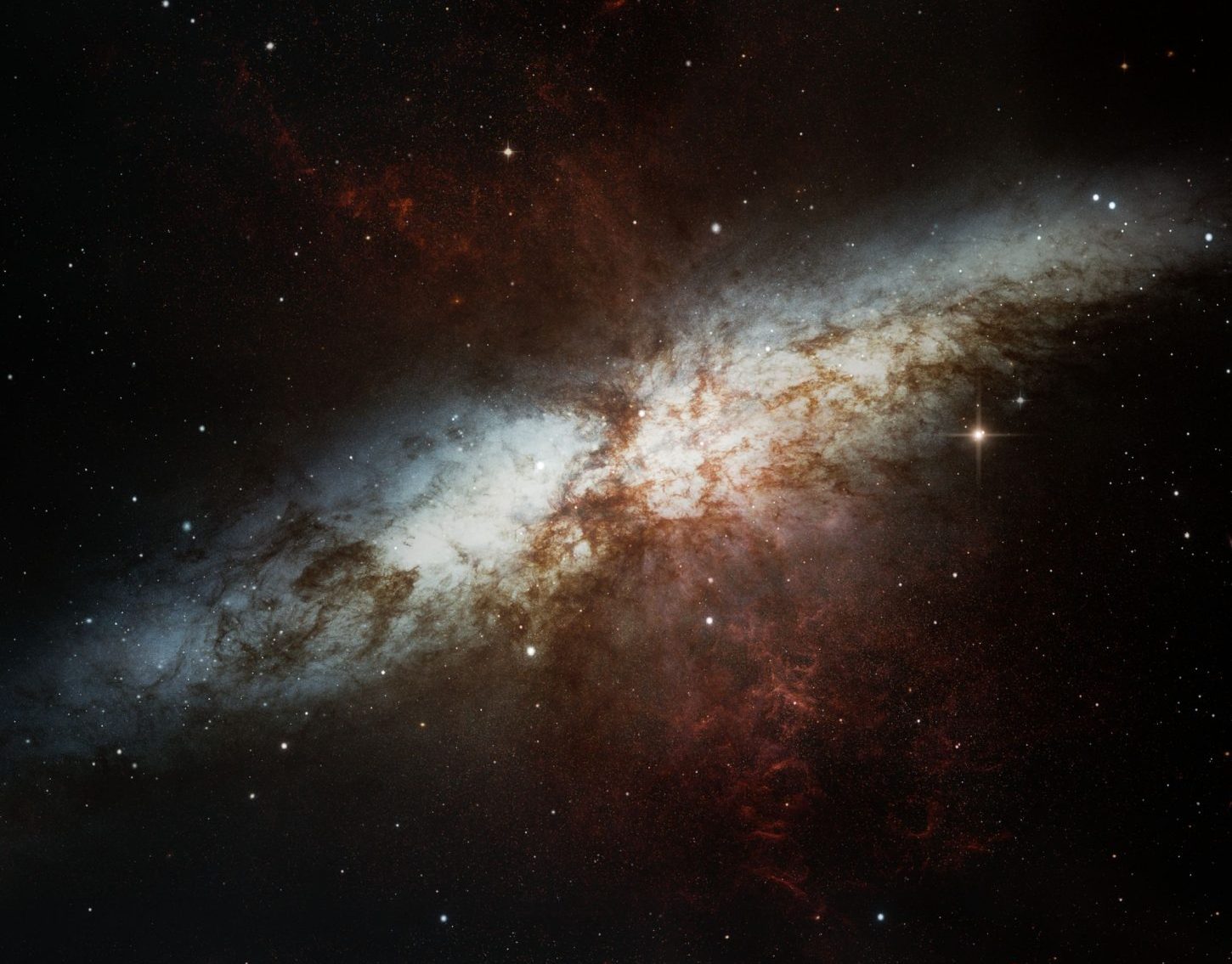
    It doesn’t care about your job, your bank balance, or the fact that Steve from Accounts got promoted ahead of you. It remains magnificently indifferent to all such concerns and, indeed, to most concerns in general. Entire stars explode with alarming regularity while I’m trying to remember where I left my reading glasses. The universe appears to regard these events as being of broadly equal insignificance.

    Oddly enough, I find that rather comforting.

    Many of us grow up with the idea that we’re here for a reason. Somewhere, hidden amongst the cosmic paperwork, there is supposedly a grand purpose waiting to be discovered. A destiny. A calling. Perhaps an ancient prophecy involving dramatic music, a glowing sword, and an unnecessarily complicated family tree.

    As far as I can tell, this is nonsense.

    You are not the chosen one.

    Neither am I.

    No great celestial bureaucrat sits above the clouds assigning each of us a special mission, a five-year plan, and an accompanying orchestral soundtrack. The universe has outsourced all personnel decisions and no longer answers correspondence.

    The good news is that if there is no grand cosmic plan for your life, then you cannot possibly fail to achieve it.

    You don’t have to become a billionaire (it’s trillionaires now – Ed) , a celebrity, a genius, or a historical footnote in order to justify your existence. You don’t need to leave a legacy, build an empire, or optimise your personal brand. Existing is not a performance review. There is no cosmic HR department quietly assessing your quarterly progress against strategic objectives.

    You are here.

    That is already enough. You already have worth and value.

    Of course, this brings us neatly to money.

    Now don’t get me wrong. Money is useful. Food, shelter, heating, books, bicycles, and the occasional cup of coffee all require money. The universe may be indifferent, but the electricity company certainly isn’t.

    Beyond a certain point, however, our relationship with money starts becoming a little strange. Financial security is sensible. Accumulating enough wealth to buy a small island, three yachts, and a solid-gold toilet while still worrying that you don’t have enough begins to resemble a dragon sleeping on a pile of treasure. Alas even some people on the planet at the moment would give Smaug a run for his money!

    At some point “more” stops meaning “enough” and starts meaning “because the spreadsheet said so”.

    That seems a very poor use of our limited time.

    Because time, not money, is the thing we’re actually running out of and no matter how much money you have… you cannot buy yourself more time.

    Here’s the great paradox.

    Cosmically speaking, we are insignificant. Ridiculously so. The observable universe contains hundreds of billions of galaxies, each containing hundreds of billions of stars. Against that backdrop, the entire history of human civilisation barely registers as a rounding error.

    And yet there has never been another person exactly like you.

    There never will be again.

    The particular combination of memories, experiences, fears, hopes, talents, flaws, interests, favourite songs, terrible decisions, and peculiar habits that constitutes “you” has never existed before in the history of the universe. Every human being is both utterly insignificant and completely unique.

    The universe may not care.

    That doesn’t make you unimportant.

    It simply means your importance exists at a different scale.

    People spend an extraordinary amount of effort dividing themselves into tribes. Wealth. Religion. Nationality. Politics. Class. Social status. Favourite operating systems. Human beings seem unable to resist inventing categories and then arguing about them.

    Underneath all of that, however, we’re remarkably similar.

    We’re all temporary.

    We’re all fragile.

    We’re all making it up as we go along.

    We’re all trying to get through the week with some combination of dignity, optimism, caffeine, and luck.

    The labels we use to separate ourselves are often far less interesting than the things we share.

    Eventually every one of us will be gone.

    The kings.

    The billionaires. (Ahem trillionaires I said! – Ed)

    The influencers.

    The politicians.

    The people who spend all day arguing with strangers on the internet and who make “spreading hatred and misery” their mission.

    Especially them.

    One day the universe will forget every empire, every nation, every corporation, every social media platform, and every argument ever conducted online. Given enough time, all the works of mankind will vanish without trace. Even this great magnus opus you’re reading now will vanish (not a bad thing if you ask me – Ed)

    And honestly?

    That’s fine.

    I don’t find that depressing.

    I find it liberating.

    If our time here is brief and the universe has no grand plan for us, then we’re free to decide for ourselves what matters. We can learn interesting things. We can read good books. We can listen to great music. We can collect ridiculous objects. We can fall in love. We can build friendships. We can help one another where we can and, as a general rule, try not to make somebody else’s brief existence more difficult than it needs to be.

    We are all mayflies on a small rock hurtling through an indifferent cosmos.

    We may as well make the experience pleasant.

    So make the tea.

    Take the walk.

    Read the book.

    Listen to the music.

    Buy the absurd thing if it genuinely delights you and doesn’t bankrupt you.

    Laugh often.

    Be kind.

    Learn things.

    Share things.

    Help people.

    The universe doesn’t give a **** about you.

    Which is precisely why we should give a damn about each other.

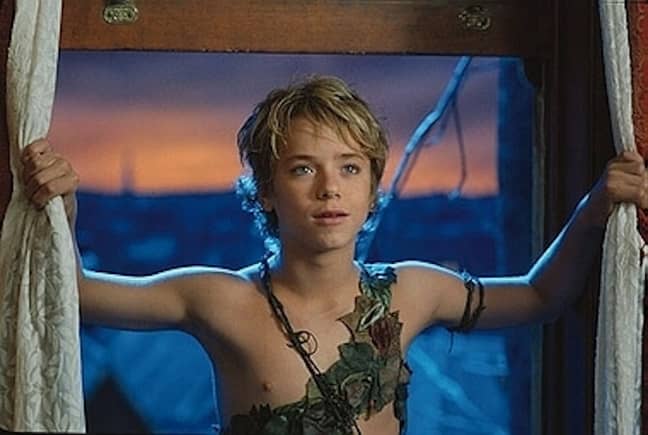
  • Growing Old without Growing Up.

    Growing Old without Growing Up.

    Growing older is inevitable. We can’t escape time’s relentless arrow.

    Becoming dull, joyless and terminally serious, however, is entirely optional.

    Somewhere along the journey into adulthood society quietly slips us a secret rulebook explaining which activities are considered acceptable and which are not. Which hobbies are “appropriate” and which enthusiasms should probably be packed away in the loft next to your old Action Men and abandoned dreams.

    Apparently the rules are something like this:

    • Assembling obscure collections = eccentric
    • Getting excited about games or toys = immature
    • Watching cartoons as an adult = deeply concerning
    • Discussing Discworld or Hitchhiker’s Guide lore at length = suspicious

    I appear to have misplaced my copy of the rulebook.

    But really… what is an adult?

    As children we assume adults understand life. We imagine they possess confidence, competence and secret knowledge unavailable to younger minds. Adults seem unfazed by everything. They understand taxes voluntarily. They know how insurance works. They probably even enjoy shopping for furniture in IKEA.

    You assume that one day a hidden switch in your brain will flip from Child Mode to Fully Operational Adult™ and suddenly the mysteries of existence will reveal themselves.

    Except that day never comes.

    Instead there’s just a gradual realisation that you’re no longer young. One day you’re racing down hills on a bicycle pretending to be a fighter pilot and the next you’re comparing broadband tariffs and wondering why your knee sounds like a creaky floorboard.

    Internally though?

    You still feel remarkably similar.

    You still have the same interests, fears, fascinations, anxieties and bizarre little enthusiasms. There’s a strange disconnect between your physical age and your internal self-image. In your head you’re still basically you, just with slightly more back pain and stronger opinions about kitchen appliances.

    Perhaps more worryingly, you eventually realise you’re now expected to be the responsible adult.

    You may even have children of your own who look up at you with the same wide-eyed certainty you once directed at your parents. They assume you know what you’re doing.

    Meanwhile internally you’re thinking:

    “I’m improvising wildly and hoping nobody notices here Kid!.”

    I still occasionally feel like three children in a trench coat trying very hard to pretend they understand mortgages.

    Although we don’t change much internally, society expects us to change externally. We’re expected to become relentlessly sensible. Calm. Productive. Emotionally stable. Proper grown-ups.

    Enthusiasm becomes embarrassing.

    Silliness becomes socially risky.

    Wonder becomes suspicious.

    Stoic calm and maturity becomes the norm.

    Personally, I think locking away curiosity, humour and joy in the name of adulthood does nobody any favours.

    Let’s talk about collections for a moment.

    You’re at a dinner party and someone asks what you do for fun.

    You explain that you collect slide rules, Rubik’s Cubes, fossils, cravats and old books.

    At this point you can actually watch them mentally powering down.

    You see the unspoken question slowly forming behind their eyes:

    “…why?”

    What they often don’t see is the curiosity behind it. The tactile pleasure. The fascination. The sense of continuity. The joy of holding strange little fragments of human creativity and history in your hands.

    To them it’s clutter.

    To you it’s wonder.

    Some people collect watches, paintings, cars or increasingly expensive kitchen gadgets. Depending on your social circle they may even collect spouses.

    But somewhere along the line adulthood collectively decided that joy should justify itself economically.

    I respectfully disagree.

    In Charlie and the Chocolate Factory, Mike Teevee complains that everything in the titular factory is pointless.

    Charlie replies:

    “Candy doesn’t have to have a point. That’s why it’s candy.”

    Exactly.

    Joy should exist for joy’s sake.

    Not everything meaningful has to be monetised, optimised or transformed into a side hustle for LinkedIn.

    As children our worries were relatively small. Did we have enough pocket money for sweets? Did we finish our homework? Would our Tamagotchi survive the weekend?

    Adulthood brings heavier concerns.

    Work. Money. Relationships. Responsibilities. Health. Anxiety. Stress.

    Your body also starts developing what can only be described as “design quirks”.

    Your eyesight deteriorates. Your waistline expands despite eating approximately the same foods you survived on perfectly well at twenty. Your hair either turns grey, disappears entirely or relocates mysteriously to your ears.

    And through all of this you’re still expected to project the calm, controlled demeanour of Proper Adulthood.

    But humour and joy are forms of resilience.

    They’re coping mechanisms that provide perspective on what actually matters.

    That isn’t avoidance.

    Sometimes humour is how humans carry heavy things without collapsing under the weight.

    There is, however, an important distinction between being childish and being childlike.

    Childishness is selfishness, irresponsibility and emotional immaturity.

    Childlikeness is curiosity, imagination, enthusiasm, creativity, playfulness and wonder.

    Unfortunately society confuses the two constantly.

    Push back against this whenever possible.

    There is absolutely nothing wrong with remaining curious about the world.

    At fifty-six years of age I’ve realised a few things:

    • Impressing everyone is impossible.
    • Fitting in is seriously overrated.
    • Most social rules were invented by people no wiser than you.
    • Life is finite and you only get one go at it.

    Once you realise this, something rather liberating happens.

    You give yourself permission to enjoy things openly.

    To dress oddly if it makes you happy.

    To collect weird objects, even if they are Spores, Moulds and Fungus. (Thanks Egon.)

    To laugh more.

    To stop pretending.

    To become more authentically yourself.

    So yes, I’m getting older.

    My knees occasionally produce noises worthy of a haunted mansion and I now make involuntary sound effects whenever standing up from a chair.

    But I still love puzzles.

    I still laugh at terrible jokes.

    I still make even worse puns.

    I still derive immense joy from simple things.

    I can still freewheel down a hill on a bicycle grinning like an idiot.

    And I may occasionally become unreasonably excited upon discovering an old bookshop or toyshop.

    Does that mean I never fully grew up?

    I can probably live with that.

    Quite happily, in fact.