On eclectic tastes, curiosity, ADHD, and the apparently endless search for something new.
A Question of Taste
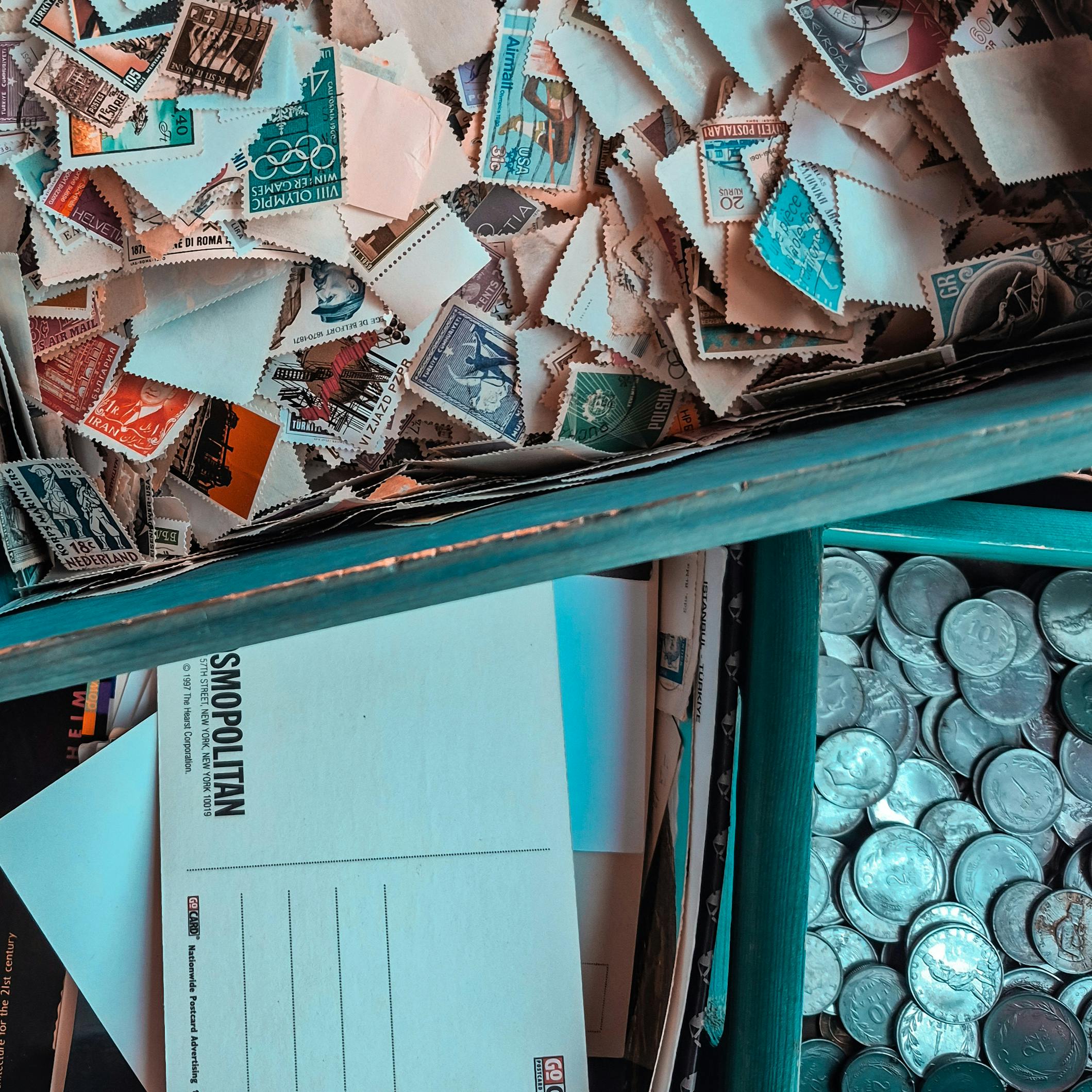
I like to think I have eclectic tastes. It sounds rather sophisticated, doesn’t it? Eclectic. It suggests someone with a broad appreciation of music, literature, cinema, and the arts. Someone who has carefully explored different genres, considered their relative merits, and developed a rich and varied collection of cultural interests.
The reality is probably closer to someone who keeps encountering things, thinking “Ooh, what’s that?”, and disappearing down another rabbit hole for the next three weeks.
I’ve always been interested in lots of different things, often things that have very little in common with one another. My music collection is all over the place, my bookshelves contain an assortment of subjects that would probably confuse a librarian, and my film collection looks like it belongs to several people who have never met and would probably struggle to agree on what to watch together.
I’ve generally described myself as eclectic, but recently I’ve started wondering whether that’s entirely accurate. Do I genuinely have unusually broad tastes, or am I simply endlessly curious about things I haven’t encountered before? And how much of that curiosity is driven by the ADHD part of my brain, constantly looking for something new to investigate?
I’m not entirely sure. Which is probably why I’ve started investigating it.
My Music Collection Needs Supervision
Music is probably the easiest place to start because my tastes are, frankly, ridiculous.
I can happily listen to progressive rock, Philip Glass, Eminem, or a classical symphony, and then follow them with some gloriously cheesy pop, a television theme tune, or a bit of 70s disco. I’ve even ventured into Mongolian throat singing and British drill rap, although those were more exploratory expeditions than permanent changes of musical allegiance. I do still listen to them occasionally, just not quite as often as some of my more established favourites.
I’m not entirely sure what Spotify’s recommendation algorithm makes of all this, although I suspect it’s quietly having some sort of breakdown. Trying to predict what I’ll want to hear next must be rather like attempting to forecast the weather on Jupiter.
There are some things I return to regularly. As mentioned above, progressive rock has been a favourite for years, as has classical music, and composers such as Philip Glass. Eminem gets a fairly regular outing too, and I have a considerable weakness for music that other people might dismiss as cheesy or unfashionable. I’ve never really understood why enjoying one kind of music should somehow prevent me from enjoying another. If I like something, I like it. I don’t particularly care whether it’s considered sophisticated, fashionable, obscure, or embarrassingly commercial.
And when I discover something unfamiliar, I rarely leave it at simply listening to it. I want to know who created it, what else they’ve recorded, where the style came from, and whether there are other artists doing something similar. One piece of music can lead to an entire evening exploring a genre I’d barely heard of that morning. Whether I’ll still be listening to any of it six months later is another matter entirely.
Some discoveries become permanent additions to my musical world. Others are brief but thoroughly enjoyable diversions. I don’t necessarily regret the ones that don’t stick. I enjoyed finding out about them, and I might well return to them occasionally.
Although I suspect the person sitting next to me when my music collection is on shuffle might wish I’d exercised a little more restraint.
The Bookshelves Aren’t Much Better
My reading habits are a little more predictable, at least at first glance. Science fiction is probably my natural home, although I also enjoy fantasy, comedy, and books that are just plain weird. Douglas Hofstadter’s Gödel, Escher, Bach is a good example of the latter, a book that manages to wander through mathematics, logic, art, music, and consciousness without appearing particularly concerned about which shelf it ought to live on. Not that my shelves follow any form of logical order that is! I have books on mathematics, next to books on architecture mixed with Terry Practchett and Adrian Tchaikovsky, Next shelf down, several dictionaries, a few graphic novels and some J.R.R. Tolkein!
I also read an awful lot of technical non-fiction. Mathematics, physics, chemistry, anthropology, popular science, and whatever else happens to catch my attention. I’m not necessarily reading these things because I need the information for anything in particular. I just find the subjects interesting, and once I’ve discovered something I didn’t know, there’s a reasonable chance I’ll want to know rather more about it.
I’m also not particularly consistent about finishing the books I start, particularly the technical or popular-science books. Sometimes I’ll read one from cover to cover, thoroughly enjoying the journey. Other times, I’ll get halfway through, encounter an idea that catches my attention, and wander off to investigate it. It might be something the author mentions in passing, or it might be something they’ve said that I don’t entirely agree with. Either way, I find myself reading about something else entirely, and the original book gets temporarily abandoned while I pursue this new line of thought.
I’m never quite sure whether this counts as being easily distracted or simply getting rather more out of a book than the author intended. I suspect the answer depends on how charitable I’m feeling towards myself that day.
There’s also the small matter of the books themselves. I have quite a lot of them, as anyone who has seen my office will confirm. And despite having shelves full of things I haven’t necessarily read ( or finished reading ) yet, I can still find myself browsing for something new. Apparently, having an extensive supply of interesting things available isn’t always sufficient to stop me looking for more.
I Used to Live at the Cinema. Almost.
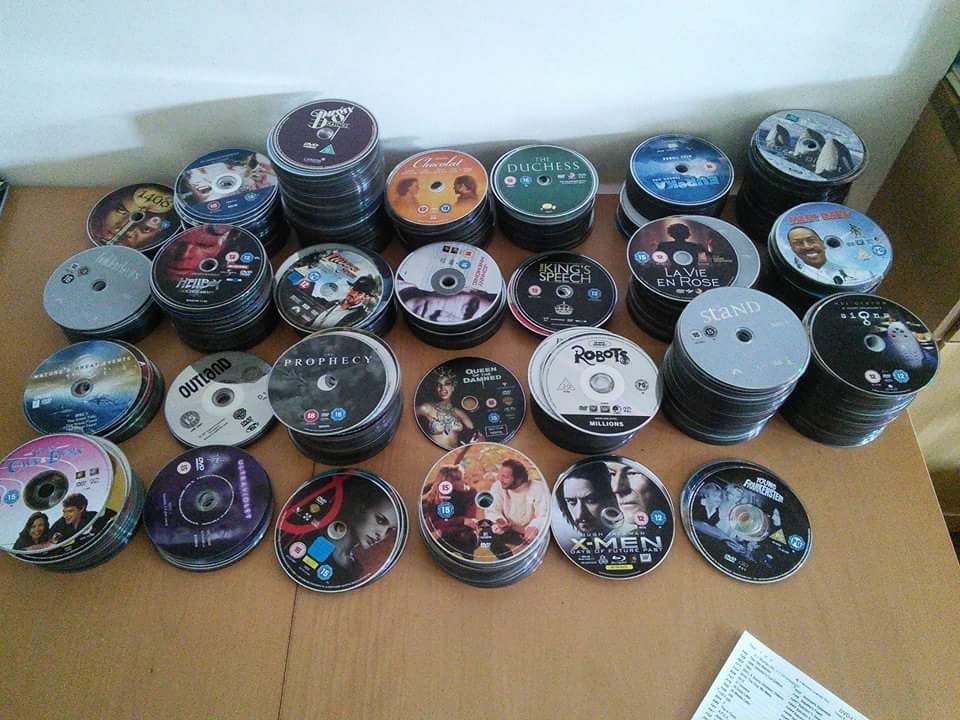
My taste in films is probably the most extreme example of my eclecticism. I have an extensive collection of DVDs and Blu-rays covering everything from science fiction and horror to classic Hollywood, musicals, foreign-language cinema, documentaries, animation, and some frankly peculiar films that I struggle to classify. Science fiction is undoubtedly a favourite, but I’m quite happy watching almost anything if it catches my attention.
My collection includes 2001: A Space Odyssey, The Seventh Seal, Mamma Mia!, and Ichi the Killer. I’m not entirely sure what that combination says about me, and I’m probably happier not knowing.
I’ve always loved going to the cinema. Before I was married and acquired responsibilities (how very inconsiderate of life), I had a membership at my local cinema and would watch practically everything they released. And I really do mean literally everything. There were occasions when I’d arrive as the doors opened, spend the entire day moving from one screening to another, and finally leave when they were closing up for the night. Sometimes I’d watch the same film several times over the an entire weekend.
I wasn’t particularly concerned about whether something was supposed to be good, critically acclaimed, or even remotely the sort of film I’d normally choose. It was a new film, I hadn’t seen it, and that was usually reason enough to give it a go. Of course, this meant sitting through some truly dreadful films, but I also discovered things I might never have chosen to watch otherwise.
I still love collecting films, but watching them has always been the important part. The collection is partly a consequence of that enthusiasm, although I’ll admit there’s something rather satisfying about having all those films sitting on the shelves, waiting to be watched again.
I’ve also developed interests in particular directors and styles of filmmaking. My collection includes films by Peter Greenaway, Jacques Tati, and Studio Ghibli, alongside mainstream blockbusters, classic comedies, and an assortment of films that are difficult to describe without making them sound considerably stranger than they already are.
There are films I return to repeatedly, just as there are albums I never seem to tire of. But I’m equally happy trying something completely unfamiliar. I suppose spending an entire day in a cinema watching whatever happened to be showing was a fairly effective way of indulging both tendencies.
Eclectic, Curious, or Just Easily Distracted?
All of which brings me back to the original question. Am I genuinely eclectic, or is there something else going on?
I’ve been thinking about the difference between enjoying a wide variety of things and actively seeking out new experiences. They’re obviously related, but I’m not convinced they’re quite the same.
Someone with eclectic tastes might enjoy classical music, heavy metal, jazz, and folk because they genuinely appreciate all four. Someone driven by curiosity might encounter an unfamiliar musical style and want to investigate it simply because it’s unfamiliar. And someone seeking novelty might find the excitement of discovering something new more appealing than the thing they’ve discovered.
I suspect I manage all three, sometimes simultaneously.
There are interests that have stayed with me for decades. Science fiction, progressive rock, classical music, electronics, and films have all been part of my life for a very long time. Whatever else I’m doing, I seem to find my way back to them eventually.
But there are also the temporary fascinations. Something catches my attention, I become thoroughly absorbed in it, investigate everything I can find, and then, sometimes quite abruptly, my attention moves elsewhere. Occasionally I return to the original interest months or years later. Sometimes I don’t.
I don’t always know why.
Is This the ADHD Talking?
I do wonder how much of this is connected to ADHD. Novelty can be particularly appealing to people with ADHD, and interest can have a considerable influence on where attention goes. I certainly recognise the experience of becoming intensely fascinated by something new, only to discover that the fascination has faded once I’ve explored it for a while.
There’s something faintly ridiculous about a brain that can announce a new lifelong passion on Tuesday and have apparently forgotten about it and moved on to something new by Friday.
But I’m reluctant to attribute everything to ADHD. Curiosity isn’t exclusive to neurodivergent people, and neither is having broad tastes. People have been collecting things, exploring unfamiliar subjects, and changing their minds about what interests them for considerably longer than we’ve had diagnostic labels to describe some of those behaviours.
I also don’t want to confuse losing interest with having my interest redirected. When I’m reading a book about physics and encounter an idea that sends me off investigating something in mathematics, I haven’t necessarily become bored with physics. I’ve simply found another question I want to answer. The original book might remain unfinished for months, but that doesn’t mean I haven’t enjoyed it or learned something from it.
Of course, sometimes I really have just become bored and wandered off to do something else. It would be dishonest to pretend otherwise.
And sometimes I suspect the excitement of discovering something new is itself part of the attraction. The initial investigation, finding out what I don’t know, discovering connections, and getting that rather satisfying feeling when something begins to make sense. Once I’ve satisfied my curiosity, I may feel quite content to move on.
Whether that’s ADHD, personality, or simply a lifelong habit of poking my nose into things, I couldn’t say.
The Thrill of the Chase
I think there’s something worth exploring in the idea that I enjoy the process of discovery almost as much as the things I discover.
When I encounter something unfamiliar, I tend to want to understand it. I don’t necessarily need to become an expert, and I certainly don’t need to turn every new interest into a permanent hobby. Sometimes I just want to find out what it is, how it works, where it came from, or why somebody thought it was a good idea in the first place.
That curiosity can take me in some peculiar directions. A piece of music leads to an unfamiliar instrument, which leads to a different musical tradition. A book raises a question that sends me off reading about something only vaguely connected to the original subject. A film introduces me to a director whose work I hadn’t encountered before, and suddenly there are several more DVDs on the shelf.
And, occasionally, the whole process ends with me knowing quite a lot about something that I will probably never need to know again.
I seem to have accumulated a considerable quantity of such information over the years. Some of it has proved unexpectedly useful. Much of it hasn’t, although it occasionally comes in handy during quizzes or when I want to bore somebody at a dinner party. My wife refers to me as “The Human IMDb” because I’m forever telling her, “Oh, he was in this movie with X and Y, and it was directed by Z. But Z also directed A and B, which appeared in movie Q, which went on to spawn a series starring both X and Y again!” This sort of outburst is usually met with a “Shut up and watch the movie Pete!” from my wife !
I suppose the danger is that I can spend so much time investigating the next interesting thing that I neglect something I was perfectly happy doing before. I’ve certainly done that often enough, and there are probably several unfinished books around the house that could testify on the subject if books were capable of giving evidence.
Still, I don’t think every interest needs to last forever to have been worthwhile. Sometimes finding out about something is enough.
The Things That Stick
What I find particularly curious is that, despite all this wandering around, some things never seem to lose their appeal.
I’ve listened to certain kinds of music for decades and still enjoy them. I can revisit a favourite film even when I know exactly what’s going to happen, and science fiction remains my default choice when I’m looking for something to read. There are books I’ve returned to, subjects I’ve studied repeatedly, and interests that have survived numerous excursions into completely unrelated territory.
So the idea that I’m simply chasing novelty doesn’t quite explain everything. If it did, surely I’d have abandoned all those old favourites years ago.
I don’t know what separates the lasting interests from the temporary ones. Perhaps some subjects are simply broad enough that there’s always something else to discover within them. Science fiction certainly offers an almost unlimited supply of new ideas, while music is hardly a field in which anyone is likely to run out of unfamiliar things to hear.
Or perhaps I just really like progressive rock.
That seems equally plausible.
A Little Bit of Everything
I’m still not entirely sure whether eclectic is the right word to describe my tastes. It certainly describes the contents of my music collection, bookshelves, and DVD library, but I’m less convinced it explains how they ended up that way.
Some things I discovered because I was deliberately looking for something new. Others appeared by accident, or because somebody recommended them, or because I happened to encounter them while investigating something else entirely. Some have become lasting favourites, while others have been enjoyable diversions that I rarely revisit.
I suspect my curiosity has a great deal to do with it, and ADHD may well contribute to the enthusiasm with which I occasionally throw myself into a new subject. But I don’t feel any particular need to pin the whole thing down to a single explanation.
There are still enormous amounts of music I haven’t heard, books I haven’t read, films I haven’t watched, and subjects I know almost nothing about. Some of them I’ll probably love, some I’ll dislike, and others will leave me wondering why I bothered.
I quite like the idea that I haven’t finished discovering what I enjoy.
Although, looking at the number of books and films I already own, I probably ought to make a start on some of my unwatched and unread piles first.