Tag: identity

  • The Surprisingly Bearable Lightness of Being Alone

    The Surprisingly Bearable Lightness of Being Alone

    My wife and I can happily spend an entire evening in the same room, each doing our own thing. She’s reading, knitting, or crocheting. I’m probably tinkering with something, researching some obscure Minecraft modpack code on my tablet, or catching up on Mastodon. The cat is supervising, as befits her position as Supreme Leader of the Household.

    We’re together without constantly demanding each other’s attention.

    Our cat has very clear rules about social interaction.

    She wants company.

    Until she doesn’t.

    She wants affection.

    Until she doesn’t.

    She wants to sit on your lap.

    Until she suddenly remembers she’s an apex predator and bites you.

    In many ways, she’s taught me something rather profound about companionship. It’s perfectly possible to enjoy company without needing it every waking moment.

    I do, however, usually manage not to sit in people’s laps and bite them.

    Growing Older (Or How I Learnt to Stop Socialising and Love Solitude)

    From my mid-twenties to my mid-thirties, I lived alone in a flat in Aberdeen. I had an extensive movie collection, back when films came on gloriously space-hungry VHS cassettes instead of DVDs. I had my PC, my World of Warcraft account, and my hamster, Quark.

    Also I had a group of ex-university friends who regularly dragged me out to clubs, pubs, Sunday morning greasy fry-ups, and parties.

    I went because I thought that was what people were supposed to do.

    Don’t get me wrong. I had fun… ish.

    I didn’t know I was autistic back then. That particular bombshell hadn’t even been manufactured yet, never mind dropped from an overhead B-52.

    But most of the time I was on my own. I’d spend evenings watching films, playing games, or trying to work out where Quark had managed to roll his exercise ball this time.

    I was content.

    I enjoyed my own company.

    Even then, I instinctively understood there was a profound difference between being alone and being lonely.

    I’m now in my mid-fifties, and that feeling hasn’t changed.

    As I’ve written before in Growing Old without Growing Up, getting older hasn’t made me feel old. If anything, it’s made me more comfortable ignoring society’s expectations.

    I genuinely enjoy my own company.

    That doesn’t mean I don’t enjoy spending time with my wife. Quite the opposite. She’s my companion, my best friend, my soulmate, and the person I most enjoy sharing life with.

    But we don’t live in each other’s pockets.

    She has her allotment. While I greatly appreciate eating what she grows, that’s her thing. She’ll happily disappear there for hours while I disappear into my home office to write code, build a new Minecraft mod, or update this blog, as I’m doing now.

    She’s even been known to disappear to Greece for a fortnight on one of her spiritual retreats while I stay at home, work, look after the house, and consume quantities of junk food that would never pass Wife Quality Assurance.

    Two Whole People

    I’ve never liked the expression “my other half”.

    It suggests we arrive in the world as unfinished jigsaw puzzles, wandering around until someone finally turns up holding the missing piece.

    I don’t believe that.

    When my wife and I married, we were already two complete human beings, each with our own interests, quirks, ambitions, and ways of spending our time.

    We simply chose to walk through life together.

    Sometimes our paths overlap completely.

    Sometimes they briefly diverge.

    Most of the time, they run happily alongside one another.

    Healthy relationships aren’t two halves making a whole. They’re two complete people choosing to share their lives. Otherwise we accidentally make relationships responsible for fixing problems they were never designed to solve.

    Alone Is Not Lonely

    I’m not antisocial, and I certainly haven’t given up on people.

    I just don’t need quite so many of them.

    I’ve stopped mistaking constant interaction for happiness.

    It turns out the old saying “quality over quantity” applies to friendships as much as almost everything else.

    Being alone is a description while being lonely is an emotion.

    One tells you who’s in the room, the other tells you how you feel about it.

    You can feel desperately lonely in the middle of a crowded pub.

    You can spend an entire weekend by yourself without feeling lonely for a single moment.

    They’re completely different states.

    We often assume one causes the other.

    It doesn’t.

    Why We Fear Solitude

    Modern life seems oddly suspicious of solitude.

    There’s an unspoken expectation that adulthood should involve an ever-expanding network of friends, colleagues, networking groups, WhatsApp chats, neighbourhood associations, social media platforms, and community events.

    As though popularity can somehow be measured by unread notifications.

    But relationships aren’t Pokémon.

    Collecting more doesn’t necessarily improve your life.

    You certainly don’t need to catch them all.

    Learning to Enjoy Your Own Company

    If you can’t enjoy an afternoon by yourself, adding another person doesn’t magically create contentment.

    Sometimes it simply creates another person to disappoint.

    There’s a quiet confidence in being able to entertain yourself, pursue hobbies, disappear down strange rabbit holes of curiosity, spend an afternoon wandering around a museum, sit beside a river watching the world go by, or simply think.

    Many of us have felt far lonelier surrounded by people we couldn’t truly be ourselves around than we ever have sitting quietly on our own.

    Company is wonderful when it’s shared with people who let us be authentic.

    Company simply for the sake of avoiding silence can feel surprisingly empty.

    I’m not suggesting we all become hermits.

    Please don’t finish reading this article, delete all your social media accounts, and move into a cave somewhere in the Highlands.

    We’re social creatures, and spending time with people we care about can be deeply rewarding.

    Some of my happiest memories involve my wife.

    Others involve good friends.

    But some involve nobody else at all.

    Cycling through the countryside.

    Sitting in a park watching deer run across a field.

    Heading into London with absolutely no plan beyond wandering wherever curiosity takes me.

    Looking at things.

    Really looking.

    Watching boats drift along the Thames.

    Eating an excellent burger.

    Drinking great coffee.

    Spending far too long in a bookshop.

    Simply sitting and watching the world move around me without feeling any obligation to join in.

    Bliss.

    Maybe the goal isn’t to spend less time with people.

    Maybe it’s simply to stop measuring the health of our lives by how many people happen to be in the room.

    Being alone isn’t the opposite of belonging.

    Sometimes it’s simply the place where you finally belong to yourself.

    As I finished writing this, Spotify decided to shuffle on All By Myself by Eric Carmen.

    I laughed out loud.

    Not because it proved my point, but because somewhere inside the vast collection of algorithms analysing my listening habits, a computer had spectacularly misunderstood me.

    Then again, perhaps that’s the whole point.

    Being alone and being lonely aren’t the same thing.

    Spotify still hasn’t worked that out.

    Besides, the song got one thing wrong.

    I wasn’t by myself.

    My wife was in the next room.

    The cat was almost certainly plotting something.

    And, perhaps most importantly, I was already exactly where I wanted to be.

  • The Curious Freedom of Pretending to Be Somebody Else

    The Curious Freedom of Pretending to Be Somebody Else

    (Or: How Dressing as a Victorian Ghostbuster Became the Most Authentic Version of Me.)

    I’ve spent most of my life pretending to be somebody else.

    Every day I slip into the role of a “fully functioning adult”, whatever that’s supposed to be. I mask, I moderate my behaviour, I soften the rougher edges of my personality and generally do my best impression of somebody who has absolutely everything under control.

    At weekends, however, the mask begins to slip. I’m far closer to my authentic self and considerably less restrained by the image I’m expected to project in the office. That isn’t to say I suddenly become a different person. It’s more that I stop spending quite so much energy trying to look like everybody else.

    Masking takes a tremendous amount of mental effort. It’s one of the biggest contributors to the autistic burnout I’ve written about previously, which is probably why people find it rather odd when I tell them one of my favourite hobbies involves dressing up as a Victorian Ghostbuster.

    Surely, if I spend all week performing one role, the last thing I’d want to do for fun is perform another?

    Well… not quite.

    My Everyday Performance

    I’ve written before about masking, about my “stage voice” developed to hide my stammer, and about the burnout that often follows from constantly monitoring my behaviour. I won’t repeat all of that here, but it essentially boils down to one simple observation.

    To some extent, Everyday Pete is a carefully rehearsed performance.

    I monitor how loudly I’m speaking and pay attention to my body language. I’ll try to maintain the right amount of eye contact. I avoid wandering too far down conversational rabbit holes, no matter how desperately I want to explain why TCP handshaking is the perfect analogy for small talk or why slide rules are infinitely more interesting than calculators.

    It’s a performance I’ve become very good at.

    It’s also exhausting.

    Enter the Ghostbuster

    You’d therefore think that taking this daily performance and turning the dial up to eleven would be the last thing I’d choose to do for enjoyment.

    Oddly enough, the exact opposite is true.

    Before I explain why, let me introduce the character.

    Not the costume.

    The personality.

    He’s confident, bombastic, friendly, outgoing, slightly pompous, and considerably larger than life. He’ll happily wander up to complete strangers, pose for photographs, chat to children about ghosts, and generally behave as though the world is one enormous stage.

    In other words, he’s the sort of chap who cheerfully says hello to strangers.

    I generally hope strangers haven’t noticed me.

    Even his name is rather revealing.

    He’s called Professor Mycroft Spengler, which, if you’re familiar with my literary and cinematic tastes, tells you almost everything you need to know about me.

    He’s a shameless fusion of Mycroft Holmes and Egon Spengler.

    Mycroft Holmes is hyper-intelligent, analytical, quietly formidable, happiest solving problems rather than socialising, and far more comfortable working behind the scenes than standing in the spotlight.

    Egon Spengler is a scientist, collector of obscure knowledge, enthusiast of spores, moulds and fungi, socially awkward, endlessly curious, and gloriously unconcerned with appearing “normal”.

    Neither of them are conventional action heroes.

    Nor are they particularly charismatic.

    Neither are especially loud.

    So naturally my subconscious looked at those two characters and thought:

    “Yes… let’s combine them.”

    Apparently, given complete creative freedom, my brain built a character whose defining qualities are intelligence, curiosity, scientific obsession, and spectacular social awkwardness…

    …and then gave him brass goggles and a wooden proton pack.

    When I stop and think about it, that probably says something important about my personality!

    The Tax

    Let’s clear one thing up, though.

    For years Comic Con terrified me. I’d travel all the way there, reach the entrance, see the crowds stretching off into the distance and quietly turn around and go home. On the occasions I did make it inside, I’d often become overwhelmed within twenty minutes and leave feeling thoroughly dejected.

    Mycroft changed that.

    He’s become a form of armour. Not armour that hides me, but armour that allows me to function in an environment that would otherwise overwhelm me. He gives me a role to play, a script to follow and, perhaps most importantly, permission to interact with people in ways that everyday Pete would normally avoid. I no longer worry about whether I should talk to strangers because, quite frankly, that’s exactly what a Victorian Ghostbuster ought to be doing.

    It works.

    But it isn’t free.

    I can never manage more than one day at a convention because afterwards I have to pay the bill I’ve quietly been running up. I’ve hyper-masked for most of the day. I’ve spoken to hundreds of people, posed for countless photographs, answered questions, smiled, joked, improvised, stayed in character and absorbed the noise, lights, crowds and sheer intensity of the event. By the time I get home my social battery isn’t merely low, it’s running on fumes.

    The following day I usually disappear. I’ll spend it quietly reading, listening to music, tinkering in the workshop or simply enjoying the blissful absence of people. Not because I didn’t enjoy Comic Con. Quite the opposite. I loved every minute of it. I’m simply paying yesterday’s invoice. It’s worth every penny, but it’s an expensive hobby in ways most people never see.

    The Subtle Difference

    I should probably correct myself slightly because calling cosplay a form of masking isn’t entirely accurate. It’s a useful analogy, particularly as I’m technically wearing a physical mask of one sort or another, but the two things are fundamentally different.

    Masking, at least for me, is about hiding parts of myself. I minimise my differences, smooth away the rough edges and quietly blend into the background. The aim is to become less noticeable, less awkward and, if I’m honest, a little more forgettable.

    Cosplay does exactly the opposite.

    Instead of hiding my differences, it exaggerates them. It takes my enthusiasm, curiosity, theatricality and love of the absurd and turns the volume right up. It’s the difference between whispering and standing on a table shouting:

    “THIS IS ME. I’M WEIRD, AND I’M PERFECTLY HAPPY ABOUT IT.”

    There’s something wonderfully liberating about that.

    Why Ghostbusters? Why Steampunk?

    People occasionally ask why I chose Ghostbusters.

    My usual answer is simply:

    “Why not?”

    Ghostbusters has always been one of my favourite film franchises because, when I stop and think about it, none of the characters are conventional heroes. Ray Stantz is wonderfully enthusiastic and endlessly curious. Egon Spengler is socially awkward, intellectually brilliant and entirely unconcerned with appearing “normal”. Peter Venkman presents himself as confident and charismatic, but I’ve always suspected the sarcasm and bravado are simply another form of armour. Whenever life becomes complicated, he deflects it with humour.

    They’re not superheroes.

    They’re underdogs who accidentally become heroes.

    I find that strangely reassuring.

    Steampunk satisfies a completely different part of my personality. If you’ve read my article about museums you’ll already know I have an enduring fascination with discovery, invention and curiosity. The Victorian and Edwardian periods were full of people pushing at the boundaries of science and engineering, trying to understand how the world worked and asking, “What if?”

    Now, before the historians reach for their keyboards, I’m well aware that Victorian Britain had more than its fair share of problems. Steampunk isn’t history. It’s alternative history, a world where Babbage’s Difference Engine really did work, where Jules Verne reached the Moon. A fantasy world where Wells and Poe somehow became engineers instead of novelists. It’s a world of steam-powered computers, impossible inventions and outrageous imagination, but without the poverty, colonialism, misogyny and social inequality that accompanied the real Victorian era.

    Put Ghostbusters and Steampunk together, add a dash of amateur dramatics and an unhealthy enthusiasm for brass and mahogany panelling, and out walked Professor Mycroft Spengler.

    In Closing

    The funny thing is that my Ghostbuster costume isn’t really hiding who I am. It’s revealing parts of me that everyday life quietly encourages me to keep folded away. He’s louder than I am, more confident than I am, and considerably more theatrical than I am, but none of those qualities are fake. They’re all me.

    Just with a proton pack.

    Eventually the goggles come off, the proton pack goes back on its stand and Mycroft quietly disappears until the next convention. The exhaustion arrives shortly afterwards and, as always, the masking tax has to be paid. For a few glorious hours, though, pretending to be somebody else allows me to stop pretending to be somebody I’m not.

    That’s a trade I’ll happily keep making.

  • Pride Month and the Anxious Asexual

    Pride Month and the Anxious Asexual

    This is a post I thought I might not write.

    Not because I’m ashamed or anything, but mainly because I wasn’t sure I could do it justice.

    It’s LGBTQIA+ Month (June), coinciding with and commemorating the Stonewall riots. It’s a month of marches, festivals and parades celebrating the LGBTQIA+ community, promoting equality and acceptance, and remembering the activism that laid the bedrock for many of the rights we enjoy today.

    Every June, my social media fills with rainbow flags, Pride events, celebrations and discussions.

    And every June I find myself wondering the same thing:

    Am I allowed to be here?

    The Invisible Letter

    I’ve always carried a nagging feeling that perhaps I shouldn’t.

    Maybe if I expand the acronym from LGBTQ+ to LGBTQIA+, I feel a little more comfortable including myself. It’s that all-important A at the end.

    A for Asexual, Aromantic or Agender.

    I am, for my sins, asexual.

    One of the main reasons I struggle to include myself in LGBTQIA+ festivities is what is often called passing privilege.

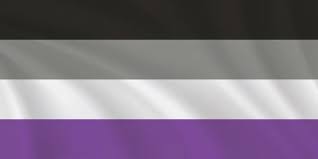
    Nothing about me, save perhaps my asexual flag pin or rainbow lanyard, immediately singles me out as “different”.

    My autism is invisible.

    My congenital anosmia is invisible.

    My asexuality is equally invisible.

    I’ve never been picked on, abused, beaten up or discriminated against for things people couldn’t see.

    Most people assume I am straight, and unless I choose to disclose my asexuality, I can move through the world without attracting much attention.

    That can create a feeling of awkwardness, or even guilt, when engaging with LGBTQIA+ spaces.

    I feel as though others have fought battles that I have largely been spared.

    Yet invisibility brings its own challenges.

    Asexuality is frequently misunderstood, dismissed or erased entirely.

    The result is a curious sense of standing both inside and outside the community at the same time; connected to its struggles and history, while sometimes feeling hesitant to claim a place within it.

    The Feeling of Not Being “Queer Enough”

    I often wonder whether I should even be here.

    Am I taking up space meant for others?

    Do I really belong?

    Am I part of the community or merely an ally?

    Should I even describe myself as LGBTQIA+?

    These questions are surprisingly common among asexual people.

    I and those like me spend so much time being overlooked that we can end up overlooking ourselves.

    Pride Isn’t Actually About Sex

    One of the reasons asexuality can seem confusing to people outside the community is that many assume LGBTQIA+ identities are fundamentally about sex.

    Mention Pride and some people’s minds immediately jump to attraction, relationships and sexuality.

    Viewed through that lens, asexuality appears to be an odd fit.

    After all, how can someone who experiences little or no sexual attraction belong within a community that many outsiders mistakenly define by sexual attraction?

    The answer is simple.

    Pride has never really been about sex.

    At its heart, Pride is about identity.

    It’s about authenticity.

    It’s about visibility and community.

    It’s about recognising that human beings don’t all fit neatly into society’s expectations and that nobody should be shamed for existing outside those expectations.

    Asexual people understand that experience all too well.

    Many of us grew up feeling different without quite understanding why.

    We watched friends develop crushes, navigate relationships and talk about attraction in ways that simply didn’t resonate with our own experiences.

    Some of us spent years wondering whether we were late bloomers, broken, repressed or somehow missing a piece of ourselves.

    The journey may look different from those of other LGBTQIA+ people, but the underlying themes of self-discovery, acceptance and belonging are often remarkably familiar.

    The Ace Spectrum

    It’s also worth remembering that asexuality isn’t a single, uniform experience.

    The ace umbrella encompasses a wide spectrum of identities, including demisexual and grey-asexual people whose experiences of attraction may be infrequent, conditional or significantly different from what society considers typical.

    In my own case, I’ve been very happily married for seventeen years, which often surprises people when they learn that I’m ace.

    One of the most persistent misconceptions about asexuality is that it somehow excludes relationships, intimacy or deep emotional connections.

    It doesn’t.

    Being ace isn’t necessarily about the absence of love, companionship or commitment; it’s about the way attraction is experienced.

    The ace spectrum is broad enough to include people who never experience sexual attraction, those who experience it only rarely, and those for whom it emerges primarily from strong emotional bonds.

    Human relationships, as it turns out, are rather more nuanced than simple tick-box categories.

    Why Pride Matters

    Pride celebrates the freedom to exist honestly.

    It celebrates the right to be seen as who you are rather than who society expects you to be.

    Those are things asexual people share completely with the wider LGBTQIA+ community.

    You don’t need to experience sexual attraction to understand the importance of authenticity.

    And you certainly don’t need to experience sexual attraction to deserve a place at Pride.

    In Closing

    Perhaps that’s what I’ve slowly come to realise over the years.

    Pride isn’t a competition.

    It’s not awarded based on visibility, hardship or how obvious your identity is to strangers.

    It’s not about proving you’re “queer enough”.

    It’s about recognising that people come in many different forms and that none of them should have to hide who they are.

    Including those of us whose differences are invisible.

    Including those of us who sometimes stand at the edge of the parade wondering whether we should even be there.

    We do.

    And maybe that’s reason enough to celebrate.

  • This Post Was Written by AI

    This Post Was Written by AI

    Wait, just wait…

    By “AI” I do, of course, mean an Actual Idiot.

    Namely, myself.

    Obvious clickbait title, eh? Thought that’d catch you!

    Let me elucidate.

    Actually, no. Let me explain.

    Words like elucidate are what got me into this mess in the first place.

    Despite my best intentions, I apparently sound artificial.

    I’m not offended by this. In fact, I’m quite fascinated by it.

    I’d noticed that my writing scored embarrassingly highly on various online “Was this written by AI?” tests. At first I couldn’t understand why.

    Well, that’s not entirely true.

    I had a fair-to-middling idea why.

    It’s my writing style.

    It’s too… measured.

    Too formal.

    Too structured.

    Too fond of words like fair-to-middling.

    I grew up with a fairly severe stammer. (See my previous post about that.)

    As a result, I spoke slowly and used small, simple words. But just because I spoke slowly, chose my words carefully and delivered them in a flat, measured manner didn’t mean I lacked a vocabulary.

    Far from it.

    I was a voracious reader.

    If there was something to read, I read it.

    Books.

    Magazines.

    Newspapers.

    Encyclopedias.

    Dictionaries.

    The backs of cereal boxes.

    If it contained words, it was fair game.

    My nose was almost permanently buried in a book.

    I developed a particular fondness for older literature. Poe, Lovecraft, Shelley, Dumas, Dickens and many others filled my head with strange vocabulary and elaborate sentence structures.

    Reading dictionaries and encyclopedias gave me a phenomenal vocabulary. Positively Brobdingnagian, one might say.

    (I use that word rather a lot. It’s one of my favourites. Perhaps I should stick with “Big” going forward?)

    My irritating near-photographic memory meant I accumulated a vast store of facts and trivia. So much so that my parents’ nickname for me was “The Professor”, because I was always explaining how something worked, who invented it or why some obscure historical event mattered.

    In public, however, I was deeply introverted.

    I embodied the old instruction:

    “Speak when you’re spoken to.”

    And even then, I generally replied with the minimum amount necessary to remain polite.

    I developed an inferiority complex that never entirely left me.

    I’m fifty-six years old.

    I work for a large multinational IT company and support some fairly significant clients.

    Think military.

    Think government.

    Think organisations with enough bureaucracy to make Kafka and Orwell ask everyone to calm down.

    And yet, in my head, I’m still just a code monkey.

    Most people my age have become team leaders, managers, senior managers or directors.

    Not me.

    I never particularly wanted promotion.

    I lack anything resembling a healthy ego.

    I’m just as happy writing a flagship application or major piece of software as I am testing somebody else’s code or filling out administrative paperwork.

    I’ve never been good at putting myself forward.

    I rarely assume excellence.

    I rarely even claim competence.

    Which is ridiculous, of course.

    I know I’m good at what I do.

    I find that difficult to say.

    In fact, if I’m being painfully honest, I’m very good at what I do.

    There. I’ve said it.

    Please don’t make me do it again.

    At university, the expected trajectory was a PhD.

    I dropped out at the end of my BSc during my Master’s.

    Why?

    Because I couldn’t picture myself as a doctor.

    (Albeit a Doctor of Mathematics rather than the Gallifreyan variety.)

    Me?

    A stammering working-class lad from a family of labourers and cooks?

    I knew my place.

    And in my mind, it certainly wasn’t “Doctor”.

    Looking back, that says rather more about me than it does about academia.

    My lack of ambition and reluctance to promote myself influences my writing too.

    I minimise myself.

    I soften statements.

    I hedge.

    I qualify.

    I write passively because active statements feel uncomfortably close to boasting.

    Even writing this article feels slightly unnatural.

    I’ve deliberately filled it with “I am”, “I did” and “I think” statements.

    Normally I’d be restructuring sentences, removing myself from them and quietly disappearing into the background.

    The urge to do so is considerable.

    I’m resisting it for the sake of the experiment.

    So perhaps that’s why AI detectors think I’m an AI.

    Not because I write like a machine.

    But because I write in a style that is structured, measured and oddly formal.

    The irony is that I was probably sounding like this long before anybody took artificial intelligence seriously.

    For the record, I’m not particularly an AI enthusiast.

    My mathematical background means I understand the statistical prediction and pattern-matching taking place beneath the surface.

    My IT background helps me understand the engineering behind it.

    I find the technology fascinating.

    I find many of its applications considerably less so.

    Personally, I wouldn’t trust a large language model to write a postcard, let alone a blog or novel.

    Speaking of novels, I have one.

    Actually, I have ten.

    Although, technically, they’re ten versions of the same novel.

    None of them will ever be published because none of them will ever be finished.

    I keep discovering ways to improve them.

    Or ruin them.

    The distinction becomes increasingly blurry after version seven.

    As for AI-generated writing?

    I find much of it technically impressive but emotionally hollow.

    Competent.

    Coherent.

    Soulless.

    Perhaps that’s why I’m amused when people accuse me of writing like an AI.

    I’ve spent a lifetime trying to figure out how to sound more human.

    It would be deeply ironic if I finally succeeded just as the machines started sounding like me.

    BEEP BOOP.. END OF POST ERROR : REFILL #C0FFEE.

  • My Life as a Stammerer

    My Life as a Stammerer

    Most people are surprised when I tell them I have a stammer.

    That’s because they don’t hear it.

    Or rather, they don’t hear the amount of work that goes into making sure they don’t hear it.

    The Early Years

    I am a stammerer and have been all my speaking life.

    At school I was picked on for it and tried to minimise it by speaking more slowly and using smaller, simpler words. This, in turn, made people assume I wasn’t intelligent. Everyone talked down to me and treated me as if I was less capable than I really was.

    People didn’t just hear my speech difficulty.

    They assumed I had a thinking difficulty.

    I quickly learned that if people struggle to understand how you speak, many of them begin making assumptions about how you think.

    If eyes are the windows to the soul, then perhaps the mouth is the WiFi enabled smart speaker to the mind?

    (Hmm, you’re stretching the analogy a little thin there. – Ed.)

    It wasn’t until later, when I was in secondary school, that I got a speech therapist who actually made a difference.

    Although, at the time, I was less than pleased with her approach.

    She wrote me a letter, sealed it, and told me to deliver it to my headmaster at school the next day.

    Now, in the early 1980s, at my school you only went to the headmaster’s office for one thing.

    Namely, corporal punishment.

    So there I was, standing outside the headmaster’s office, listening to the sound of leather on palms and hearing the wails of the student inside, getting more nervous by the second.

    The door opened, a crying boy emerged, and the headmaster , a veritable mountain of a man feared by all , stepped out, took one look at me and exclaimed:

    Little? What are you doing here? Come in, boy.”

    Long story short, I nervously handed him the letter and he did something I’d never seen before, nor since.

    He laughed.

    He promptly marched me down to the “forbidden zone” ( namely the teachers’ common room, which in those days was a haze of cigarette smoke ) addressed my English teacher by her first name and told her, in no uncertain terms, that I was joining her after-school acting club.

    I couldn’t argue.

    I mean, I wanted to, but you never answered back to the headmaster.

    Press-ganged against my will into the acting club?

    I swear there must be something in that which violates the Geneva Convention.

    Oddly, on stage I noticed something.

    I rarely stammered over my lines.

    I never stammered when singing.

    (I mean, I couldn’t hold a tune if you gave it to me in a bucket, but at least I didn’t stammer tunelessly.)

    And I could recite whole Shakespearean monologues like…

    Well, I was going to say like an RSC professional, but no…

    Like a sixteen-year-old Scottish schoolboy.

    The difference?

    The speech became:

    • structured
    • rhythmic
    • intentional

    I wasn’t speaking spontaneously.

    I was performing.

    The Post-Education Years

    Over the years, through university and into work, I kept the performance up.

    I developed:

    • a comfortable speech rhythm
    • pacing and pauses
    • a fallback repertoire of repeated phrases
    • verbal scaffolding
    • and, eventually, my “stage voice”

    Many decades (and one very late autism diagnosis) later I realised something else.

    In researching autism and trying to understand its impact on my life , and ways to mitigate it , I discovered the concept of autistic masking.

    Once I understood masking, I recognised I’d been doing exactly the same thing with my speech. My repertoire of repeated phrases and stock responses? Echolalia!

    Long before I knew the word “masking”, I was already an expert at it.

    Today people often look at me with genuine confusion when I tell them I stammer.

    Invariably someone replies:

    “But… you don’t stammer!”

    That means I’m doing what I’m doing well.

    But what they don’t see is:

    • the intense concentration
    • the constant monitoring and adaptation of what I’m saying
    • the fatigue from the continual mental effort
    • the stress of trying to do all of that and get my point across at the same time

    I’ve become remarkably good ( you might even say circus-level good ) at spinning plates on sticks.

    What people don’t realise is this:

    Fluency is not the absence of effort.

    When the Mask Slips

    Of course, it doesn’t mean I can get away with this all the time.

    Maintaining the performance takes a tremendous amount of mental energy.

    Running my ship with shields up all day eventually depletes the dilithium crystals and I need time to recharge.

    When I’m tired, my stammer returns.

    When I’m overwhelmed, my stammer returns.

    When I’m under pressure or stressed, my stammer returns.

    This isn’t failure.

    It’s simply the consequence of running out of the resources required to maintain a very energy-intensive system.

    The Stigma of the Stammer

    Despite it being 2026 as I write this, and despite the enormous strides made in neurodiversity awareness and acceptance, I still encounter stigma.

    Sometimes it is unintentional and well-meaning.

    Sometimes it is neither.

    People:

    • become impatient and try to rush me
    • make assumptions about my intelligence (or perceived lack thereof)
    • take pleasure in mocking or joking about my stammer
    • simply talk down to me

    And the thing that really grinds my gears is when people, under the guise of being helpful, decide to finish my…

    (Sandwiches? – Ed.)

    No.

    My sentences.

    Like so many neurodiversity-related challenges, the actual problem isn’t usually the stammer itself.

    The problem is often society’s reaction to it.

    Summing Up

    When I was young, the goal was often to hide differences.

    Today we’re increasingly learning to understand them.

    I still have a stammer.

    The difference is that now I understand it.

    I understand the techniques I’ve developed, the effort they require, and the role they’ve played in shaping who I am.

    I also understand that communication is about far more than flawless delivery.

    A person’s worth isn’t measured by the smoothness of their speech.

    And perhaps that’s one of the more encouraging things about the growing neurodiversity movement.

    We’re slowly learning that different doesn’t mean broken.

    Sometimes it simply means different.

    That seems like a conversation worth having.

    …. Even if it occasionally takes me a little longer to say it.

  • Growing Old without Growing Up.

    Growing Old without Growing Up.

    Growing older is inevitable. We can’t escape time’s relentless arrow.

    Becoming dull, joyless and terminally serious, however, is entirely optional.

    Somewhere along the journey into adulthood society quietly slips us a secret rulebook explaining which activities are considered acceptable and which are not. Which hobbies are “appropriate” and which enthusiasms should probably be packed away in the loft next to your old Action Men and abandoned dreams.

    Apparently the rules are something like this:

    • Assembling obscure collections = eccentric
    • Getting excited about games or toys = immature
    • Watching cartoons as an adult = deeply concerning
    • Discussing Discworld or Hitchhiker’s Guide lore at length = suspicious

    I appear to have misplaced my copy of the rulebook.

    But really… what is an adult?

    As children we assume adults understand life. We imagine they possess confidence, competence and secret knowledge unavailable to younger minds. Adults seem unfazed by everything. They understand taxes voluntarily. They know how insurance works. They probably even enjoy shopping for furniture in IKEA.

    You assume that one day a hidden switch in your brain will flip from Child Mode to Fully Operational Adult™ and suddenly the mysteries of existence will reveal themselves.

    Except that day never comes.

    Instead there’s just a gradual realisation that you’re no longer young. One day you’re racing down hills on a bicycle pretending to be a fighter pilot and the next you’re comparing broadband tariffs and wondering why your knee sounds like a creaky floorboard.

    Internally though?

    You still feel remarkably similar.

    You still have the same interests, fears, fascinations, anxieties and bizarre little enthusiasms. There’s a strange disconnect between your physical age and your internal self-image. In your head you’re still basically you, just with slightly more back pain and stronger opinions about kitchen appliances.

    Perhaps more worryingly, you eventually realise you’re now expected to be the responsible adult.

    You may even have children of your own who look up at you with the same wide-eyed certainty you once directed at your parents. They assume you know what you’re doing.

    Meanwhile internally you’re thinking:

    “I’m improvising wildly and hoping nobody notices here Kid!.”

    I still occasionally feel like three children in a trench coat trying very hard to pretend they understand mortgages.

    Although we don’t change much internally, society expects us to change externally. We’re expected to become relentlessly sensible. Calm. Productive. Emotionally stable. Proper grown-ups.

    Enthusiasm becomes embarrassing.

    Silliness becomes socially risky.

    Wonder becomes suspicious.

    Stoic calm and maturity becomes the norm.

    Personally, I think locking away curiosity, humour and joy in the name of adulthood does nobody any favours.

    Let’s talk about collections for a moment.

    You’re at a dinner party and someone asks what you do for fun.

    You explain that you collect slide rules, Rubik’s Cubes, fossils, cravats and old books.

    At this point you can actually watch them mentally powering down.

    You see the unspoken question slowly forming behind their eyes:

    “…why?”

    What they often don’t see is the curiosity behind it. The tactile pleasure. The fascination. The sense of continuity. The joy of holding strange little fragments of human creativity and history in your hands.

    To them it’s clutter.

    To you it’s wonder.

    Some people collect watches, paintings, cars or increasingly expensive kitchen gadgets. Depending on your social circle they may even collect spouses.

    But somewhere along the line adulthood collectively decided that joy should justify itself economically.

    I respectfully disagree.

    In Charlie and the Chocolate Factory, Mike Teevee complains that everything in the titular factory is pointless.

    Charlie replies:

    “Candy doesn’t have to have a point. That’s why it’s candy.”

    Exactly.

    Joy should exist for joy’s sake.

    Not everything meaningful has to be monetised, optimised or transformed into a side hustle for LinkedIn.

    As children our worries were relatively small. Did we have enough pocket money for sweets? Did we finish our homework? Would our Tamagotchi survive the weekend?

    Adulthood brings heavier concerns.

    Work. Money. Relationships. Responsibilities. Health. Anxiety. Stress.

    Your body also starts developing what can only be described as “design quirks”.

    Your eyesight deteriorates. Your waistline expands despite eating approximately the same foods you survived on perfectly well at twenty. Your hair either turns grey, disappears entirely or relocates mysteriously to your ears.

    And through all of this you’re still expected to project the calm, controlled demeanour of Proper Adulthood.

    But humour and joy are forms of resilience.

    They’re coping mechanisms that provide perspective on what actually matters.

    That isn’t avoidance.

    Sometimes humour is how humans carry heavy things without collapsing under the weight.

    There is, however, an important distinction between being childish and being childlike.

    Childishness is selfishness, irresponsibility and emotional immaturity.

    Childlikeness is curiosity, imagination, enthusiasm, creativity, playfulness and wonder.

    Unfortunately society confuses the two constantly.

    Push back against this whenever possible.

    There is absolutely nothing wrong with remaining curious about the world.

    At fifty-six years of age I’ve realised a few things:

    • Impressing everyone is impossible.
    • Fitting in is seriously overrated.
    • Most social rules were invented by people no wiser than you.
    • Life is finite and you only get one go at it.

    Once you realise this, something rather liberating happens.

    You give yourself permission to enjoy things openly.

    To dress oddly if it makes you happy.

    To collect weird objects, even if they are Spores, Moulds and Fungus. (Thanks Egon.)

    To laugh more.

    To stop pretending.

    To become more authentically yourself.

    So yes, I’m getting older.

    My knees occasionally produce noises worthy of a haunted mansion and I now make involuntary sound effects whenever standing up from a chair.

    But I still love puzzles.

    I still laugh at terrible jokes.

    I still make even worse puns.

    I still derive immense joy from simple things.

    I can still freewheel down a hill on a bicycle grinning like an idiot.

    And I may occasionally become unreasonably excited upon discovering an old bookshop or toyshop.

    Does that mean I never fully grew up?

    I can probably live with that.

    Quite happily, in fact.