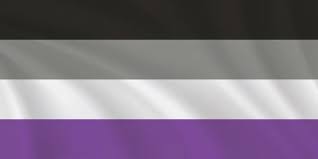
This is a post I thought I might not write.
Not because I’m ashamed or anything, but mainly because I wasn’t sure I could do it justice.
It’s LGBTQIA+ Month (June), coinciding with and commemorating the Stonewall riots. It’s a month of marches, festivals and parades celebrating the LGBTQIA+ community, promoting equality and acceptance, and remembering the activism that laid the bedrock for many of the rights we enjoy today.
Every June, my social media fills with rainbow flags, Pride events, celebrations and discussions.
And every June I find myself wondering the same thing:
Am I allowed to be here?
The Invisible Letter
I’ve always carried a nagging feeling that perhaps I shouldn’t.
Maybe if I expand the acronym from LGBTQ+ to LGBTQIA+, I feel a little more comfortable including myself. It’s that all-important A at the end.
A for Asexual, Aromantic or Agender.
I am, for my sins, asexual.
One of the main reasons I struggle to include myself in LGBTQIA+ festivities is what is often called passing privilege.
Nothing about me, save perhaps my asexual flag pin or rainbow lanyard, immediately singles me out as “different”.
My autism is invisible.
My congenital anosmia is invisible.
My asexuality is equally invisible.
I’ve never been picked on, abused, beaten up or discriminated against for things people couldn’t see.
Most people assume I am straight, and unless I choose to disclose my asexuality, I can move through the world without attracting much attention.
That can create a feeling of awkwardness, or even guilt, when engaging with LGBTQIA+ spaces.
I feel as though others have fought battles that I have largely been spared.
Yet invisibility brings its own challenges.
Asexuality is frequently misunderstood, dismissed or erased entirely.
The result is a curious sense of standing both inside and outside the community at the same time; connected to its struggles and history, while sometimes feeling hesitant to claim a place within it.
The Feeling of Not Being “Queer Enough”
I often wonder whether I should even be here.
Am I taking up space meant for others?
Do I really belong?
Am I part of the community or merely an ally?
Should I even describe myself as LGBTQIA+?
These questions are surprisingly common among asexual people.
I and those like me spend so much time being overlooked that we can end up overlooking ourselves.
Pride Isn’t Actually About Sex
One of the reasons asexuality can seem confusing to people outside the community is that many assume LGBTQIA+ identities are fundamentally about sex.
Mention Pride and some people’s minds immediately jump to attraction, relationships and sexuality.
Viewed through that lens, asexuality appears to be an odd fit.
After all, how can someone who experiences little or no sexual attraction belong within a community that many outsiders mistakenly define by sexual attraction?
The answer is simple.
Pride has never really been about sex.
At its heart, Pride is about identity.
It’s about authenticity.
It’s about visibility and community.
It’s about recognising that human beings don’t all fit neatly into society’s expectations and that nobody should be shamed for existing outside those expectations.
Asexual people understand that experience all too well.
Many of us grew up feeling different without quite understanding why.
We watched friends develop crushes, navigate relationships and talk about attraction in ways that simply didn’t resonate with our own experiences.
Some of us spent years wondering whether we were late bloomers, broken, repressed or somehow missing a piece of ourselves.
The journey may look different from those of other LGBTQIA+ people, but the underlying themes of self-discovery, acceptance and belonging are often remarkably familiar.
The Ace Spectrum
It’s also worth remembering that asexuality isn’t a single, uniform experience.
The ace umbrella encompasses a wide spectrum of identities, including demisexual and grey-asexual people whose experiences of attraction may be infrequent, conditional or significantly different from what society considers typical.
In my own case, I’ve been very happily married for seventeen years, which often surprises people when they learn that I’m ace.
One of the most persistent misconceptions about asexuality is that it somehow excludes relationships, intimacy or deep emotional connections.
It doesn’t.
Being ace isn’t necessarily about the absence of love, companionship or commitment; it’s about the way attraction is experienced.
The ace spectrum is broad enough to include people who never experience sexual attraction, those who experience it only rarely, and those for whom it emerges primarily from strong emotional bonds.
Human relationships, as it turns out, are rather more nuanced than simple tick-box categories.
Why Pride Matters
Pride celebrates the freedom to exist honestly.
It celebrates the right to be seen as who you are rather than who society expects you to be.
Those are things asexual people share completely with the wider LGBTQIA+ community.
You don’t need to experience sexual attraction to understand the importance of authenticity.
And you certainly don’t need to experience sexual attraction to deserve a place at Pride.
In Closing
Perhaps that’s what I’ve slowly come to realise over the years.
Pride isn’t a competition.
It’s not awarded based on visibility, hardship or how obvious your identity is to strangers.
It’s not about proving you’re “queer enough”.
It’s about recognising that people come in many different forms and that none of them should have to hide who they are.
Including those of us whose differences are invisible.
Including those of us who sometimes stand at the edge of the parade wondering whether we should even be there.
We do.
And maybe that’s reason enough to celebrate.